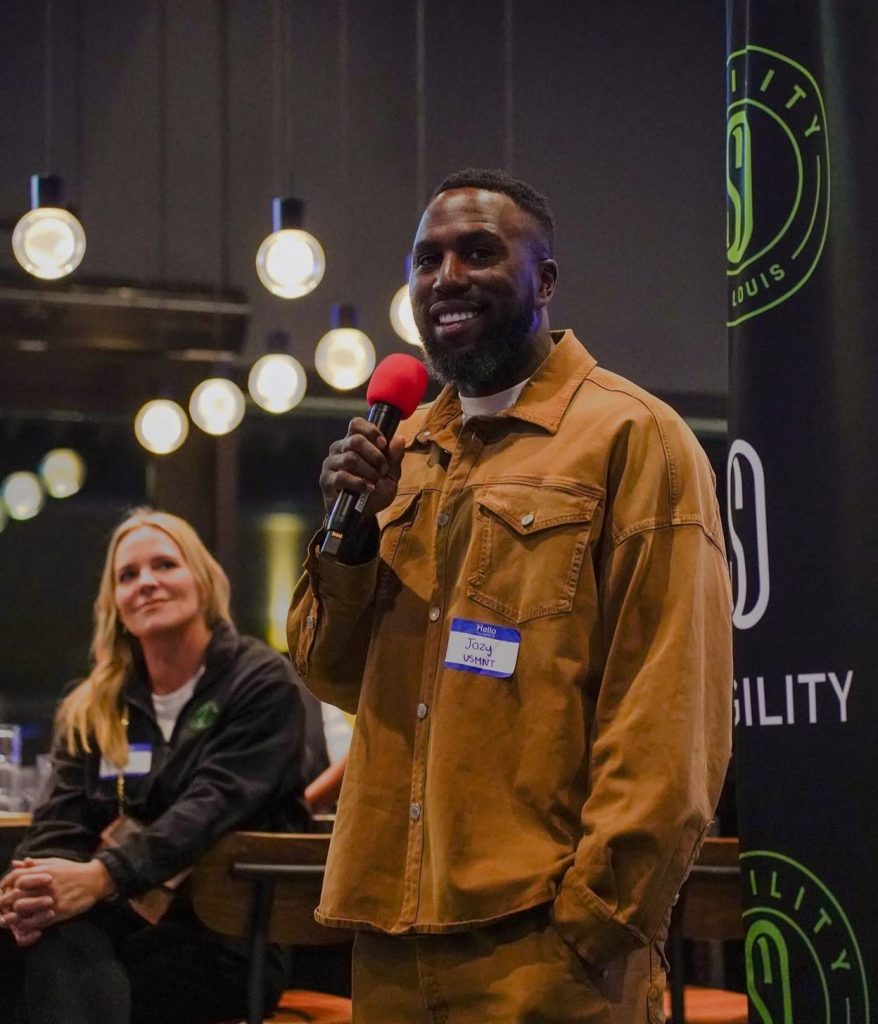
Sogility is coming to St. Louis this September. Why was this city chosen for expansion, and what opportunities do you see in this market?
StLouis is one of the most passionate and historic soccer cities in the United States. With the arrival of St. Louis CITY SC in MLS, the energy around the sport has reached a whole new level. The city has deep community roots in soccer, from youth academies to adult leagues, and a proven appetite for innovation. For us, this represents an ideal environment: a place where players, parents, and coaches are eager for advanced training solutions that can maximize development. St. Louis isn’t just a new location—it’s an opportunity to become part of a soccer culture that is already thriving and help push it even further forward.
Your concept merges soccer and technology. How would you describe the training experience Sogility offers compared to traditional methods?
Traditional soccer training often focuses on physical drills, repetition, and game play. At Sogility, we build on that foundation by integrating technology that accelerates learning and provides measurable feedback. Instead of guessing whether a player is improving, we can track data points like reaction time, passing accuracy, decision-making speed, and technical precision in real time. The experience is immersive, engaging, and personalized—players walk away not only sharper on the ball but also with a deeper understanding of their strengths and areas for growth.
What specific technologies are integrated into the center (sensors, AI, simulators, etc.), and how do they contribute to player development?
Our facilities feature a mix of cutting-edge tools, including:
Skill and cognition simulators that combine passing, shooting, and decision-making under time pressure.
Sensor-based performance tracking that records ball speed, accuracy, and repetition quality.
Video analysis and AI-driven feedback that break down technical movements and tactical decisions.
Immersive environments like rebound walls, goal stations, and virtual opponents that mimic real game scenarios.
All of these tools work together to create a training ecosystem that develops not just the physical side of the game, but also the mental and cognitive aspects—helping players think and play faster.
In your view, how can a facility like Sogility complement the work of local clubs, coaches, and academies?
We see ourselves as a partner, not a competitor. Clubs and coaches lay the foundation of team development—tactics, chemistry, and game strategy. What Sogility provides is a place where players can fine-tune their individual skills and decision-making in a controlled, data-driven environment. That makes them more prepared when they step onto the field with their teams. For academies and coaches, our technology offers an extension of their work, giving them measurable insights into player progress and helping them maximize the limited training hours they have. Ultimately, our goal is to support the local soccer ecosystem, raise the level of play, and give every player—from beginner to elite—the tools to reach their potential.
Soccer is passion, but it is also science and data. How do you maintain the right balance between the human and technological aspects of player training?
We believe technology should enhance, not replace, the human side of soccer. Passion, creativity, and intuition are what make the game beautiful. Our role is to use data and science to provide clarity—to highlight areas a player might not see, or to measure progress more accurately. But at the end of the day, it’s still about love of the game, hard work, and connection with teammates and coaches. We’re careful to keep the experience fun and inspiring, while using technology as a guide to accelerate growth.
Sogility promotes inclusivity—“an opportunity for everyone.” What initiatives or programs have you designed to ensure that both aspiring talents and recreational players can benefit?
Inclusivity is central to what we do. Not every player is aiming for a professional career, but everyone deserves the chance to improve, stay active, and enjoy the sport. That’s why we’ve built different pathways:
Performance programs for serious players looking to reach higher levels.
Recreational and youth sessions that make training fun, social, and engaging.
Community initiatives with schools and local organizations to bring the Sogility experience to underserved groups.
By tailoring the experience, we ensure that everyone—from a child taking their first touches to a college player chasing the next step—feels welcome and supported.
What are the main short- and medium-term goals you hope to achieve with the launch in St. Louis?
In the short term, our priority is integration into the community—earning trust from local players, families, clubs, and coaches. We want people to walk in, experience the difference, and see how Sogility complements what’s already happening in St. Louis soccer. In the medium term, our goal is to establish St. Louis as one of our premier locations that showcases how technology-driven training can elevate player development. Success here will serve as a model for future expansions across the country.
Looking ahead, how do you envision the future of soccer training in the next 5 to 10 years, and what role does Sogility aspire to play in that transformation?
We see soccer training becoming increasingly personalized, measurable, and holistic. In the next decade, data and AI will give players detailed roadmaps of their strengths, weaknesses, and optimal development paths—similar to how pro clubs already operate. At the same time, training will be more accessible, blending physical, cognitive, and digital elements in ways that keep players engaged. Sogility aspires to be at the forefront of that movement: a bridge between grassroots passion and cutting-edge innovation. Our role is to make professional-level tools available to everyone, democratizing access to world-class training and helping raise the overall level of the game in the U.S.